
Professional pool replastering
done right.
If your pool surface is rough, stained, or showing signs of age, we handle the resurfacing process from inspection to startup.
Our most-requested client finishes.
Five of the finishes our clients love most. Click any one to see how it looks on the steps and in the water.
👆 Tap a finish to preview it in a real pool
Replastering,
handled completely.
From inspection to startup, we take care of every step of your replaster. You pick the finish you love — we handle the rest. Easy and seamless, like dropping your car off for a detail and picking it up fresh.
- ✓Free on-site evaluation
- ✓Physical plaster and finish samples provided
- ✓Clear pricing before work begins
- ✓Fast scheduling and efficient turnaround
- ✓Clean jobsite and professional crew
Thinking about removing your pool instead? We also provide complete pool removal services. Reach out to us to discuss your options.
How our replaster process works.
We bring physical plaster samples and coordinate tile upgrades if needed through our trusted local suppliers.
Walkthrough & estimate
We inspect your pool, answer your questions, and provide a clear written estimate.
Finish selection
We bring physical plaster and finish samples to your home so you can see and feel the options before deciding.
Surface prep & application
We chip out the old plaster, prep the underlying surface, and apply your selected finish.
Final wash & startup
We complete the final wash, refill coordination, and startup guidance so the new surface begins curing the right way.
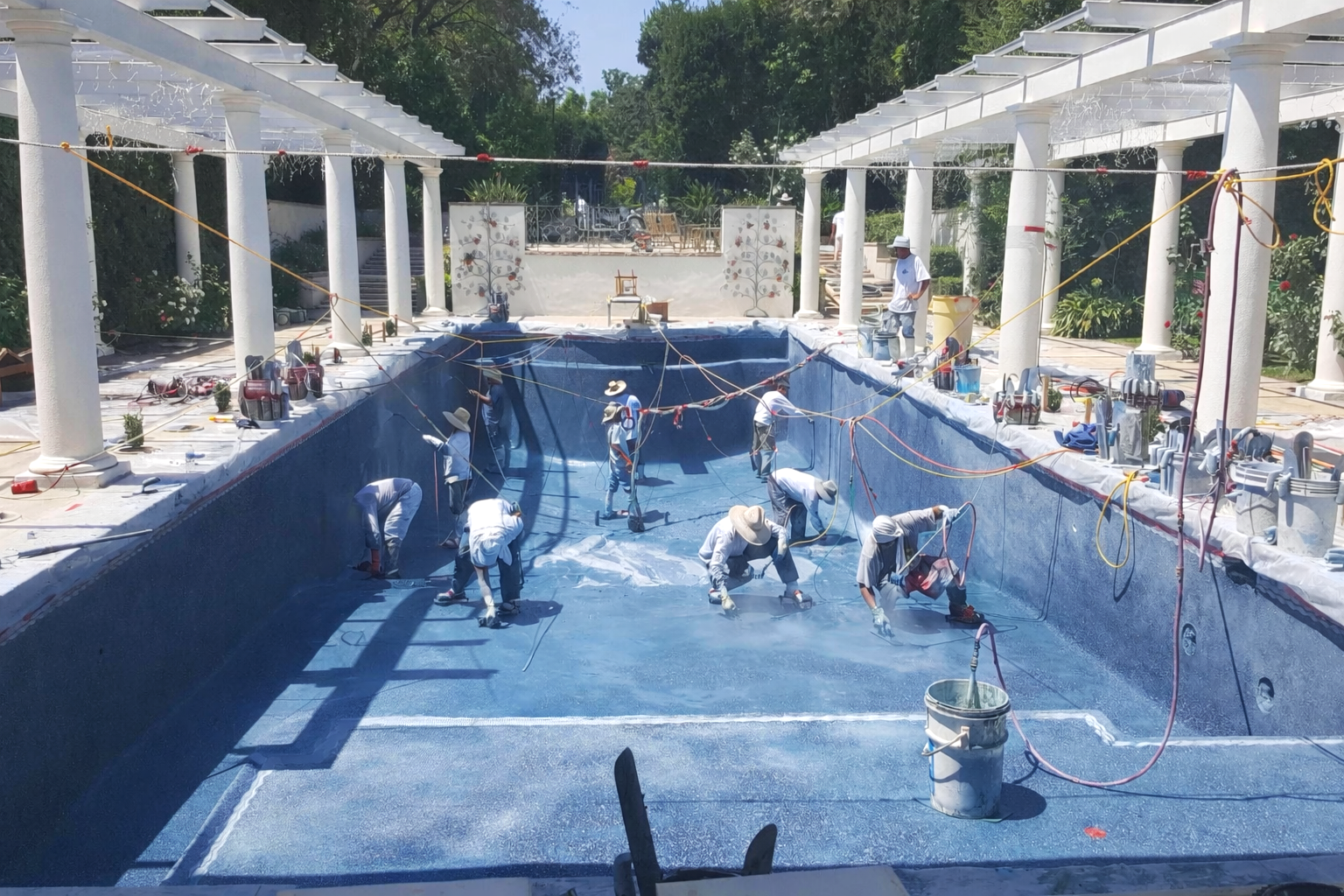 Hidden Hills, CA
Choosing the right
pool finish color.
A pool finish does more than give the pool a new surface. It also helps determine how the water will look once the pool is filled.
Clean pool water is mostly transparent, so the color and texture beneath the water have a big impact on what you see from above. The finish acts like the base color of the pool. Once water, sunlight, and depth are added, that base color can appear lighter, darker, bluer, greener, or more reflective.
This is why two pools with the same water can look completely different. A light finish may give the water a bright, clean, tropical look. A medium finish can create a more classic blue with added depth. A darker finish can make the water look richer and more reflective. Natural-toned finishes can shift the water toward a softer teal, green-blue, or lagoon-style appearance.
The final color is also affected by depth, shade, landscaping, decking, tile, and time of day. A shallow step or tanning ledge will usually look lighter than the deep end — which is why one pool can show several shades of blue at the same time.
What affects pool water color?Light finishes usually create the brightest and clearest water colors. White, light gray, and pale blue finishes often produce a light blue or aqua look — clean, open, and tropical.
Medium finishes create a richer blue with more depth and movement. Gray, blue, and blended finishes give the water more character without making the pool feel too dark. A good middle ground for a classic blue pool with a little more style.
Dark finishes create a deeper, more dramatic look. Charcoal, dark gray, and deep blue finishes make the water look more reflective — almost like a mirror. In the right backyard, a darker finish can feel elegant and luxurious.
Natural-toned finishes such as tan, brown, gold, or stone blends shift the water toward teal, green-blue, or a lagoon-style appearance. A good fit for homeowners who want the pool to feel more natural or resort-inspired.
Plaster, quartz, pebble, glass —
what's the difference?
Four common finish categories, each with their own tradeoffs.
Standard plaster
The classic entry-level option. Smooth, familiar, and usually the most budget-friendly. Vulnerable to etching and visible wear if water chemistry gets neglected.
Quartz finish
A step up from standard plaster. Cement combined with quartz aggregate for better durability and stronger color retention, while keeping a relatively smooth feel.
Mini pebble
The best balance of appearance, longevity, and performance. Smaller aggregate, refined look, more forgiving over time. Our most recommended finish for most homeowners.
Glass / Hydrazzo
For homeowners who want their pool to stand out. Glass beads add sparkle and brightness. Hydrazzo-style polished finishes deliver a true luxury, resort-level feel underfoot.
A few of our recent projects.
Pools we've resurfaced across Southern California.
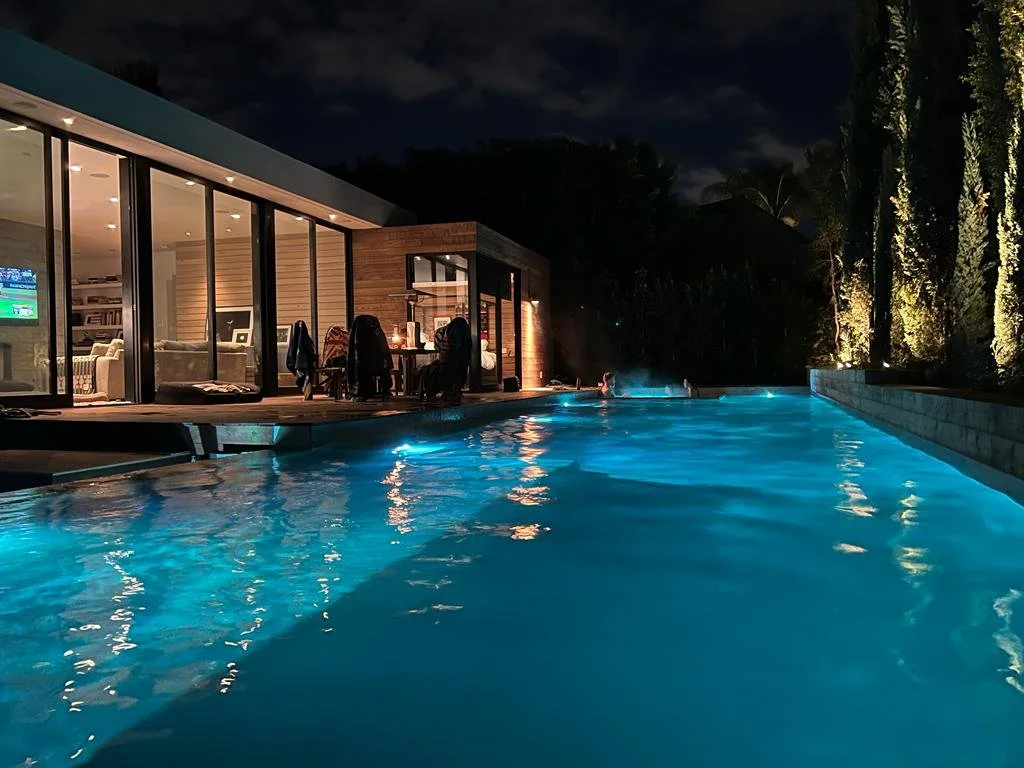 West Hollywood, CA
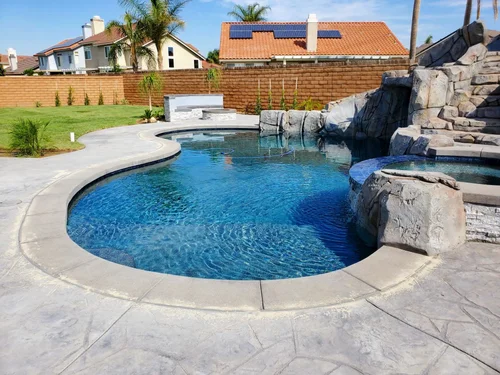 Murrieta, CA
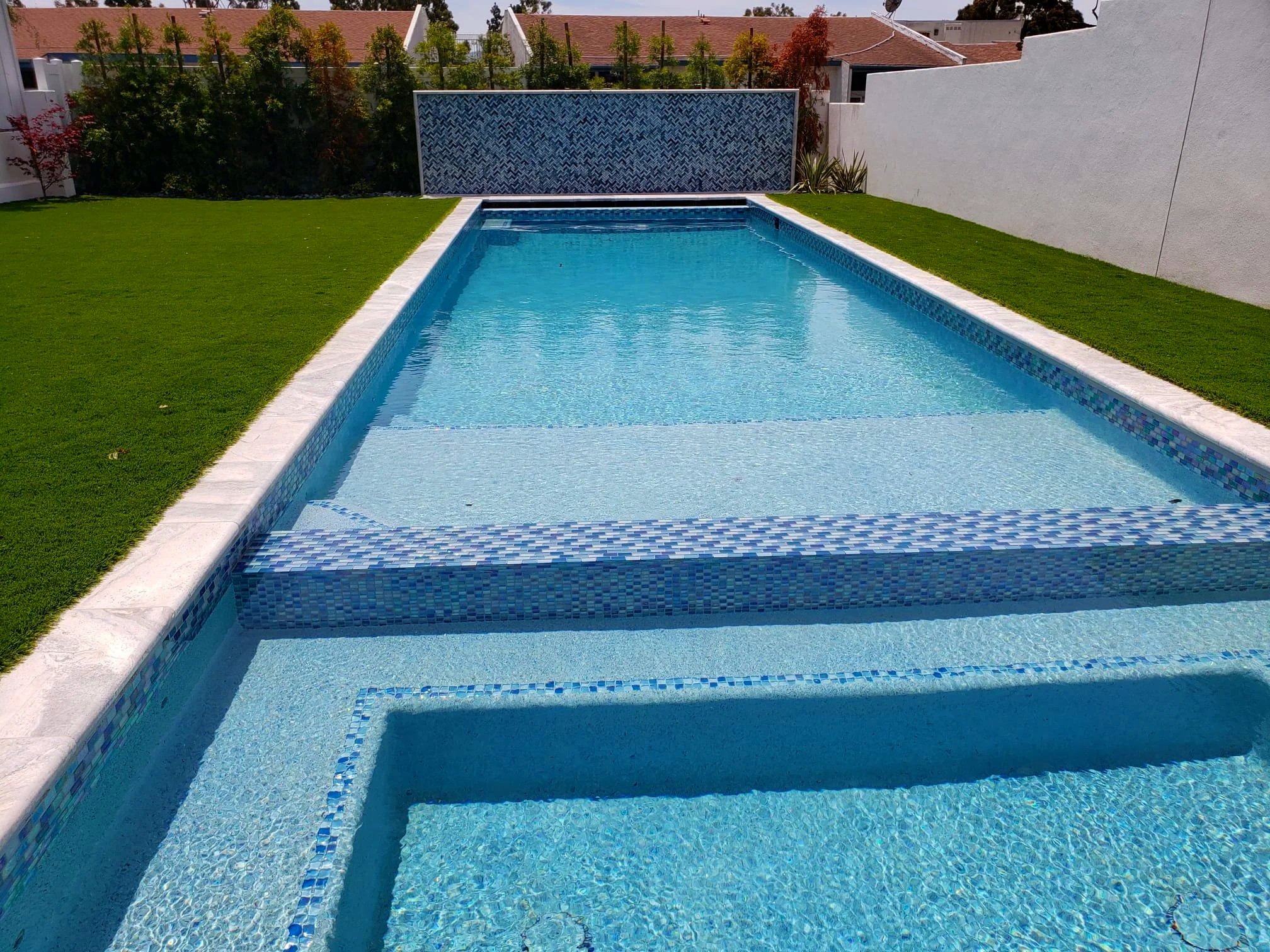 Studio City, CA
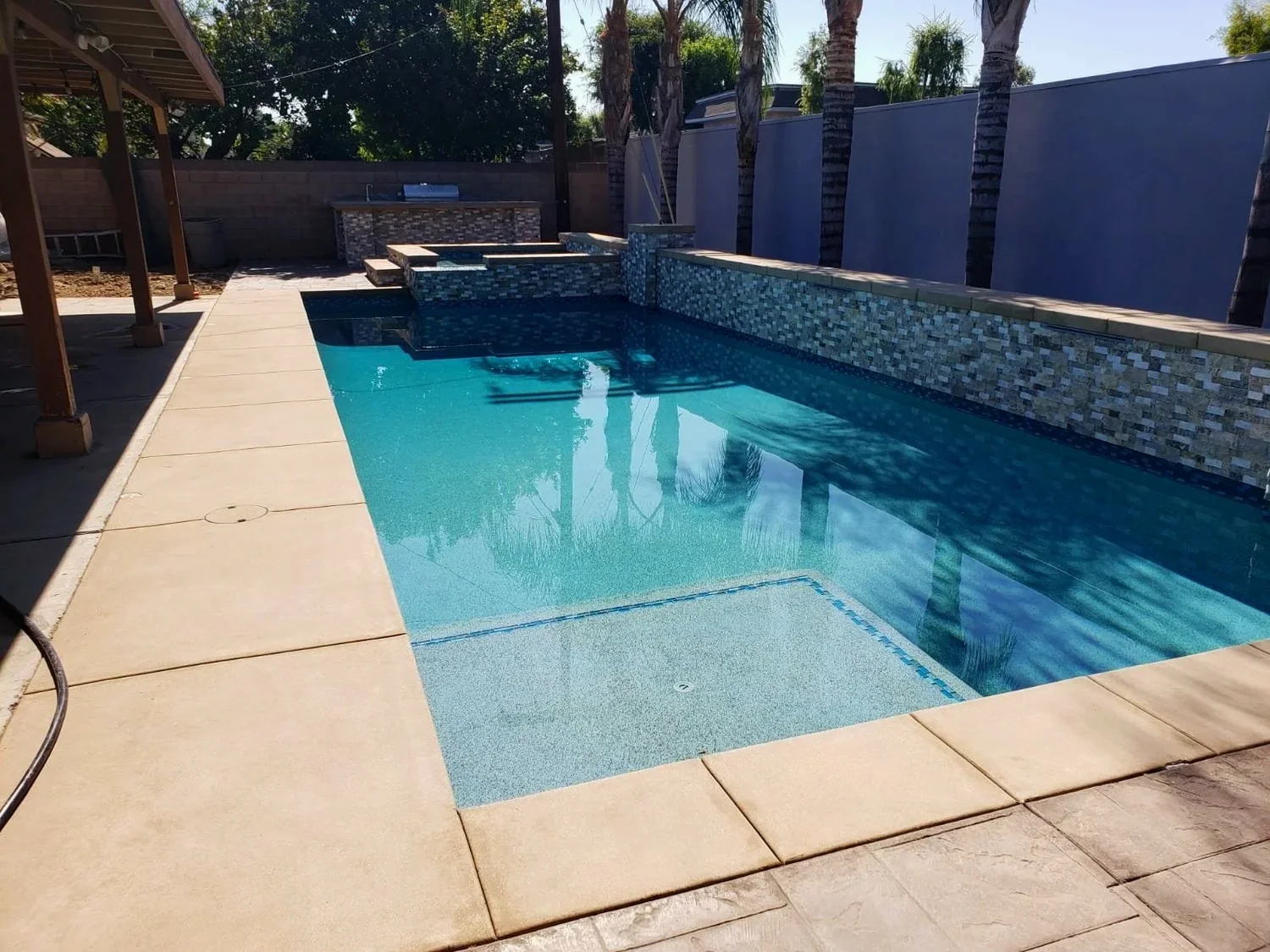 Corona, CA
Proudly serving Southern California
& surrounding counties.
Family-operated, locally-based, with crews actively running projects throughout the region.
What homeowners ask us most.
Most residential replasters take 5 to 7 days from prep through startup, depending on pool size and any repair work needed. We give you a clear timeline before work begins — not after.
Standard plaster typically lasts 7 to 12 years. Quartz and pebble finishes can last 15 to 25 years or more with proper water chemistry and maintenance. The finish you choose and how well you maintain water balance are the two biggest factors.
Plaster is a smooth cement-based surface — the traditional option. Pebble finishes use exposed aggregate mixed into the surface, adding texture, visual depth, and significantly better durability. Pebble is generally the better long-term investment for most homeowners.
No. Replastering requires a fully drained pool, but we handle the drain and prep as part of the process. You don't need to coordinate that separately.
We inspect the shell after removing the old surface. Any structural repairs are identified and quoted before we apply the new finish. We don't cover up problems — we fix them.